Showing posts with label Video Game Psychology. Show all posts

Saturday, October 1, 2016

Does Age Make Gamers Less Competitive?

I hate to admit that I'm getting older and that I qualify as a non-typical/"older gamer."  The reality is that I'm no longer a teenager mashing buttons and screaming at the screen (actually I never really was.  We only had dial-up and I grew up in the still pre-historic Internet days of the 1990's.)  As an "older gamer" a couple of different articles about a study caught my eye.  The study isn't extremely recent and was published earlier this year but seems to be getting a lot of commentary and analysis.  If you want to see the actual article and the data attached to it you can read it here: "As Gamers Age" Study.

There are some interesting tidbits to pull from this study.  Here's a list:  (I love lists)

1.) According to the ESA (the fun-folks that do things like run the rating system for games) the average age of gamers is 35.  Yessss!!!!  I guess that means that I'm not old...I'm average!  This was surprising because I have a stereotypical view of gamers--teenagers or college age people who tend to be mostly male.  It's nice to know that the average gamer could be someone like me--working full time and gaming on the side.

MarioKart remains one of my favorite competitive games.
2.) Younger gamers prefer games that are more competitive and males tend to prefer them more than females.  This piece of information makes sense to me.  I loved to play competitive games when I was in college.  Not that I really played anything that was really all that competitive--mostly MarioKart.  Maybe there's something about identity formation and finding something that you're good at.  Or maybe it's just the urge to crush someone and prove that you're superior.  But.....

3.) The desire to play competitive games decreases as gamers get older.  For some reason this discovery seemed to really steam some people.  It's a study that uses a random sample....that doesn't mean that the findings apply to everyone!  Speaking solely for myself, I would agree with this finding.  I used to really enjoy playing competitive games like Team Fortress 2 or Half-Life 2:  Deathmatch.  Not that I made the leaderboard very often or had some sort of winning record.  It was more about the thrill of competing and trying to win.

Now that I'm average, I just want to come home and relax.  I don't want to listen to some irate, crazy yelling because they lost a game or yelling just to be obnoxious.  The games I seek out are the kind that I can play how I want without having to deal with other nutbags.  I like Eurotruck-ing and listening to the radio or cleaning up a level of Viscera Cleanup Detail to unwind.

I tend to agree with the findings in this study but saw a lot of people strongly disagreeing with the findings.

One other cool feature on their website is the ability to build a "gamer profile" where you fill out a short survey and it tells you where you fit in with other gamers who are close to your age.  Check it out and see if you're like other gamers or in a league of your own.

Thursday, February 5, 2015

Online Jerks

I'm pretty sure anyone who has ever played an online game has at some point had some sort of extremely negative interaction with another player.  If you're like me, those interactions were enough to cause you to shy completely away from multiplayer games.  But why do people act like such jerks when they're online?  Is our world populated with nerdragers, ragequitters, and trolls?  I don't think so.

The article/blog entry that sparked my thoughts about this issue alleges that video games are making people into sociopaths (read it here).  In it the author explains that behavior in online games is so horrible it's almost sociopathic.  He also refers to several interesting cases where it appears that games were the source of some disturbing real-life criminal actions (like a village in the Philippines that banned DoTA after a string of stabbings or the trend of "swatting").  I would agree with him that behavior in online games can be extremely negative but I think the stabbings and "swatting" incidents are very rare.

I think people act like jerks online because it's just way too easy to hide behind an anonymous avatar.  Unless you've set up your account to be linked to your personal identity no one actually knows who you are.  This is great if you're trying to just kick back and relax.  As a high school teacher and gamer I enjoy the fact that I don't have to worry about running into any of my students while in a game.  It's not like my behavior is so horrible that I worry about what they will think but it's more of a privacy thing.  I enjoy having my space away from them when I'm not at work.

Anonymity is a double-edged sword--the privacy part is nice but what's to stop you from acting like an idiot?  You don't know any of the people you're playing with so calling them names or generally being a jerk has very few repercussions.  Sure someone can report you but what are they going to do?  Ban you for a few hours?  We all know that actually removing the jerks from a game is rare.  I also think that games remove you from the emotional consequences of the things you say in-game.  You don't get to see someone get upset over something that's said or done in a game where in real-life you can see that person's face and have to deal with the pain you've caused them.

If people acted like they do while they're playing online games our world would be filled with a lot of angry, screaming, quitting people.  I don't think people normally act like this.  For some video games are a cathartic experience--a way to blow off steam or relax after a stressful day of work.  I'm sure many of those frustrations come out in-game.

In short, I don't think video games are creating millions of sociopaths with no emotions or connection to the rest of humanity.  I think many online games offer the perfect environment in which to flex your jerk muscles--maybe the solution is that your real identity is linked to your in-game characters?  Would that be enough of a deterrent?  Would that just create more problems?  Maybe the people running these games need to take a tougher stance?  I don't know that there's an easy solution to get rid of the truly horrible behavior that takes place online.

Monday, January 26, 2015

Video Game Choices and You

As a sometime teacher of psychology I wonder a lot about what my choices in a game mean about my personality.  I don't know that there has been a lot of research done about video games and the choices players make in them.  Does it mean anything that you're male and choose to play as a female character (or vice versa)?  What about the violence or non-violence option presented in some games?  Which do you choose?  Does that say something about you as a person?

I am no expert in psychology but find queries like these very interesting.  Here are my own personal thoughts about typical RPG classes and what types of personalities might pick them.  Again, I'd like to point out that I'm not basing this on any actual research but just my own opinions and observations.

If you pick:

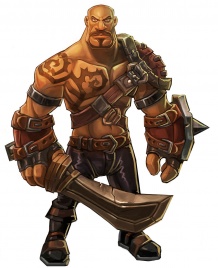
1.) Warrior--you value strength and directly facing conflicts.  In games where you're given the option to choose between sword and board or a big two-hander it might be more complex.  In a tank role you might be someone who values protection and sees yourself as a protector.  As a two-hand warrior you dominate the battlefield with your size and strength and are usually a force to be feared.  (On a side note--when given a class choice in a video game I will usually opt for for a warrior as my initial character.  I prefer melee characters who wade into the chaos but I also like the fact that you pretty much know what to do--you hit things with your giant sword.  Sure, there might be some variation in the abilities but that's the general gist.  I also enjoy the fact that they can take more damage so you could arguably say playing a warrior requires less finesse)

2.) Mage/Magic User (non-healer)--You enjoy a utilitarian role.  You're happier on the outskirts blasting away than in the center swinging your giant sword (I like giant swords..or maces...or flails).  You might prefer abilities that pack more of a punch then a rogue-type class that does small but fast damage.  Skills are more important than strength to you.  You also want more freedom in your choices--most magic users seem to have more options than other classes (like using frost spells or fire, taking strictly utility spells like crowd control or some abilities that protect from damage).  You might be someone who doesn't enjoy being the "center of attention."

3.) Rogue/Archer--You value finesse over strength.  It's not about crashing into a group of enemies and swinging away--it's about sneaking up on them and taking them out quickly and quietly or sniping them from afar.  You're patient and wait for the perfect moment to strike.  It's also about using the correct abilities at the right time.  (I am not patient enough to play a rogue.  I am always very impressed by people who are successful at this class type because I do think it requires a great amount of skill).  You prefer indirect conflict and striking from the shadows.

4.) Healer--you have a helpful or nurturing personality.  You prefer supporting your group rather than dealing damage.  You're also more willing to take responsibility for what happens but you like playing an important role in your group.  I feel like a disproportionate number of the women I've played alongside have chosen a healing role.

What do you pick?  Why do you feel comfortable in that role?  Do you think your choice is tied to your personality?